In today’s fast-paced business world, companies are under constant pressure to increase efficiency, reduce costs, and improve overall productivity. One of the most effective ways to achieve these goals is through AI automation. Artificial intelligence (AI) has revolutionised industries by taking over repetitive tasks, optimising workflows, and streamlining operations, all while delivering a significant return on investment.
Here’s how AI automation is helping businesses save both time and money.
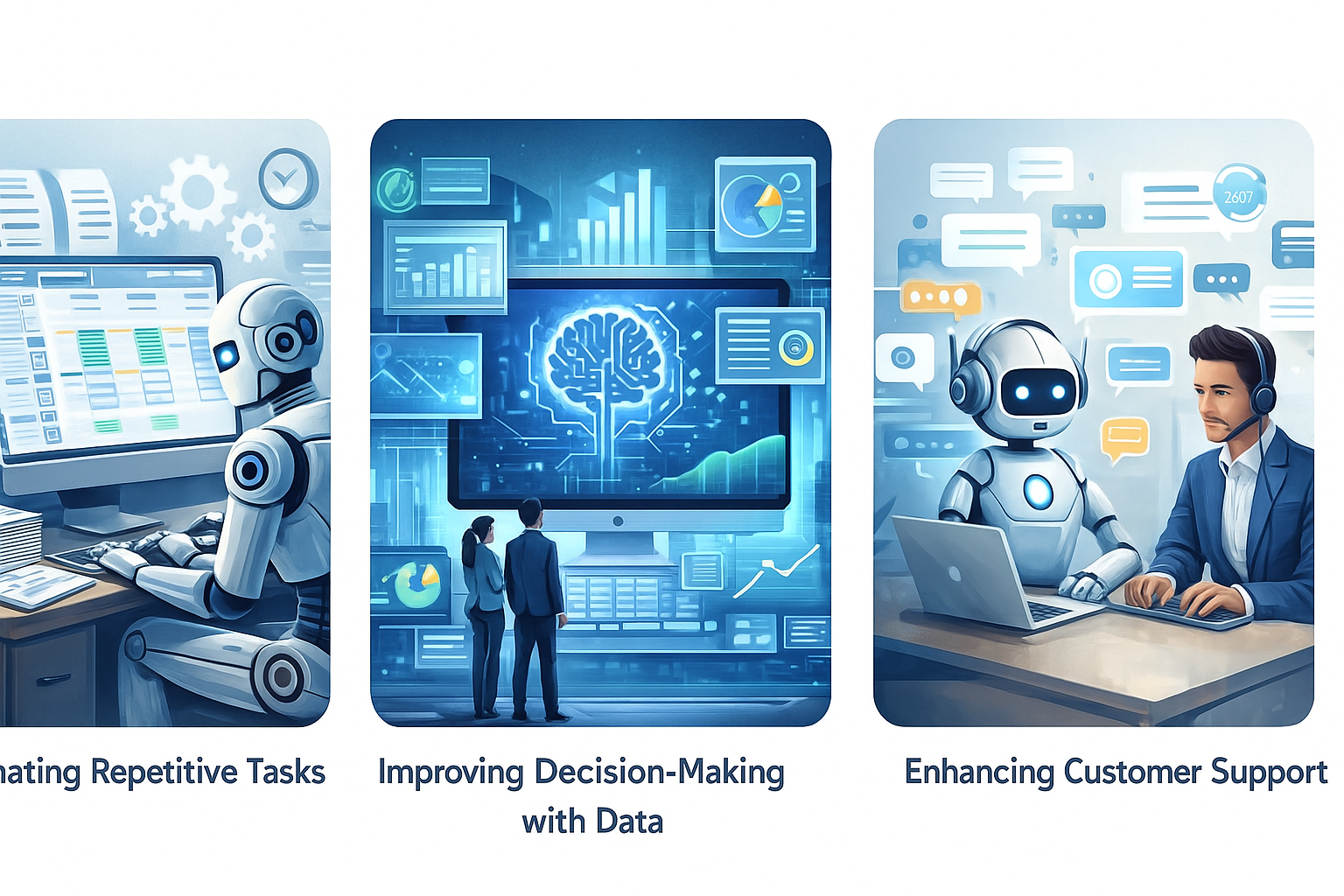
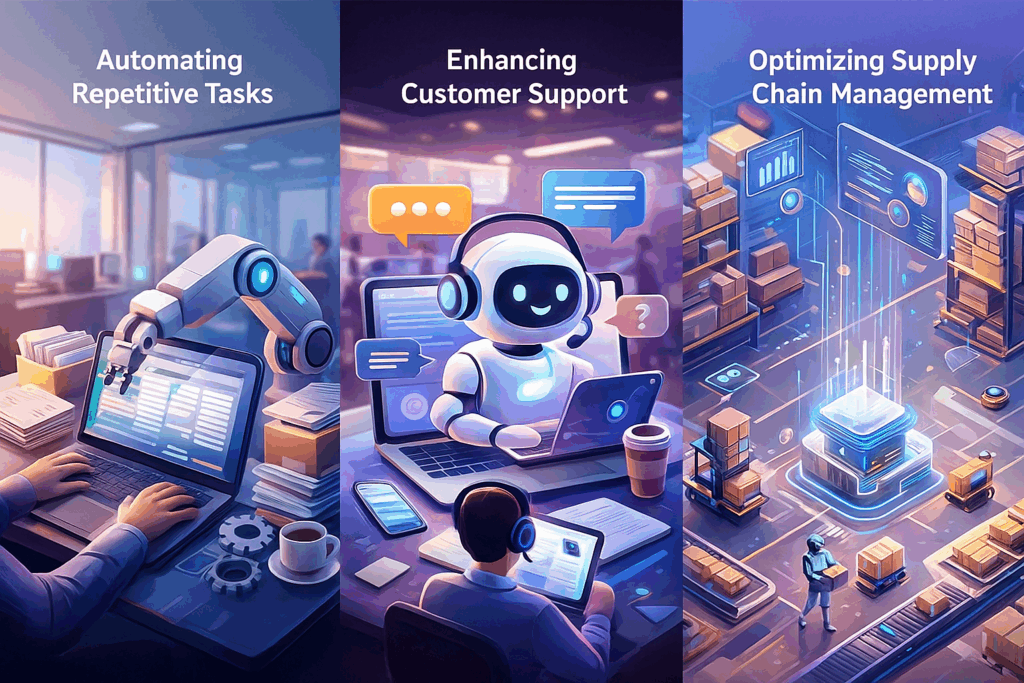
1. Automating Repetitive Tasks
Many business processes require employees to perform the same task over and over, whether it’s data entry, scheduling meetings, or processing invoices. While these tasks may seem small on the surface, when done manually, they can take up a lot of valuable time and increase the likelihood of errors.
AI automation tools can handle these tasks quickly and accurately. For example, RPA (Robotic Process Automation) can automate data entry, freeing up employees to focus on higher-value activities like strategy or customer engagement. This automation reduces the need for manual labor, which not only saves time but also eliminates human error—leading to more accurate results and fewer costly mistakes.
2. Improving Decision-Making with Data
Businesses often struggle with making data-driven decisions due to the sheer volume of information they have to analyse. Sorting through data manually is time-consuming, and many companies don’t have the manpower or tools to turn that data into actionable insights.
AI can quickly analyse large datasets, recognise patterns, and provide predictive analytics that helps decision-makers make more informed choices. For instance, AI-powered tools can analyse sales trends, customer behavior, or inventory levels and provide insights into which products are likely to sell well, which customers may churn, or when to reorder stock. This reduces the time spent on guesswork and allows businesses to make decisions that are backed by data, ultimately saving money by optimising inventory and sales strategies.
3. Enhancing Customer Support
Customer service is a critical aspect of any business, but handling customer inquiries, complaints, and requests can be incredibly time-consuming. AI-powered chatbots and virtual assistants are increasingly being used to automate customer service tasks, providing instant responses to customer questions, troubleshooting issues, and even processing orders.
These AI tools can handle a significant volume of customer queries without the need for human intervention, freeing up human agents to focus on more complex issues. This reduces labor costs and speeds up response times, improving customer satisfaction. Furthermore, AI systems can operate 24/7, ensuring that customers always have access to support, even outside of regular business hours.
4. Streamlining HR Processes
Human resources departments are often bogged down by time-consuming tasks like recruitment, onboarding, payroll, and benefits administration. AI can streamline many of these processes. For example, AI-driven recruitment platforms can quickly scan resumes, analyse candidates’ qualifications, and even conduct initial interviews using natural language processing. This significantly reduces the time spent on hiring and helps ensure that businesses find the best talent quickly.
Onboarding can also be automated, with AI systems walking new employees through the paperwork and training processes, allowing HR professionals to focus on more strategic activities. Additionally, AI can automate payroll, benefits tracking, and compliance management, further saving time and reducing the risk of costly errors.
5. Optimizing Supply Chain and Inventory Management
Managing inventory and supply chains is a complex task that requires careful planning and forecasting. AI can play a key role in automating these processes. By analysing historical data, AI systems can predict demand patterns, optimise inventory levels, and recommend the best suppliers or shipping routes. This leads to fewer stockouts, overstock situations, and costly shipping delays.
AI can also automate order fulfillment by integrating with warehouses and logistics providers. Robotics and AI-powered systems in warehouses can pick and pack orders more efficiently than human workers, leading to faster turnaround times and reduced labor costs.
6. Reducing Operational Costs
AI automation allows businesses to cut down on operational inefficiencies, which translates directly to cost savings. By automating tasks that were once performed manually, companies can reallocate resources to more impactful areas of the business. For example, instead of hiring a large team for administrative work, businesses can invest in AI-driven software that handles the bulk of those tasks.
Additionally, AI systems can help businesses identify areas where they are overspending or where they can streamline operations. For example, an AI-powered system might identify areas where energy consumption could be reduced, or where process bottlenecks are causing unnecessary delays, allowing companies to optimise their use of resources and reduce waste.
7. Enhancing Marketing Efforts
Marketing is another area where AI automation can save both time and money. AI tools can analyse customer data to create highly targeted marketing campaigns, automate content creation, and even manage ad bidding in real-time. With machine learning, AI can predict which marketing strategies will be most effective for a given audience, thus increasing ROI and lowering customer acquisition costs.
For example, AI-powered email marketing platforms can automate personalised email campaigns based on customer behavior. This not only saves time but also improves the relevance and effectiveness of the campaigns, leading to higher engagement rates and better conversion rates.
8. Increased Scalability and Flexibility
AI automation makes it easier for businesses to scale. As companies grow, they need to handle an increasing number of tasks, data, and customer interactions. Without AI, scaling would require a proportional increase in human labor, leading to higher costs. With AI, businesses can scale their operations without necessarily increasing their workforce, making it a more cost-effective solution.
For instance, a customer support AI system that can handle 100 queries a day can easily scale to handle 1,000 or even 10,000 queries without the need for additional human staff. This scalability is especially beneficial for companies that experience seasonal spikes or sudden growth.
Conclusion: The Future of AI in Business
The benefits of AI automation are clear: it saves businesses time, reduces operational costs, and improves efficiency. By automating repetitive tasks, optimising decision-making, enhancing customer service, and streamlining operations, companies can focus on innovation, growth, and delivering better value to their customers.
While the initial investment in AI technology may seem daunting, the long-term savings and productivity improvements often make it a wise choice. Businesses that embrace AI automation not only gain a competitive advantage but also position themselves for sustainable success in an increasingly digital and fast-paced world.
If you’re looking to save time and money, AI automation is no longer a luxury—it’s a business imperative.
No responses yet